- .ai/
- 00_NAVIGATION.mdthe way in
- DECISIONS-LEDGER.mdbindingStripe, destination charges · 14 July
- domains/
- payments/
- 00_INDEX.mdroutes this domain
- src/payments/checkout.ts
- docs/payments-plan.md
- docs/payments-plan-v2.md
- .cursorrules
- CLAUDE.md
// Payments — see docs/. Provider is not stated here.export async function createCharge(order: Order) {return stripe.paymentIntents.create({amount: order.total,currency: order.currency,transfer_data: { destination: order.vendorAccount },application_fee_amount: fee(order),});}// 14 July — destination charges, deliberately.
The problem
Your agent is getting better at writing code.It is not getting better at doing what you told it.
Codee3 lets your repository say which of its documents govern.
You ask one question. It reads everything that looks relevant.
Four sources. Three providers. Two architectures.
Every one written by someone careful. Every one true on the day it was written.
Three answers. All defensible. None of them yours.
It wasn’t guessing. It was choosing.
Between four documents your repository never ranked. A better model will choose more confidently.
So give it a way to say which one governs.
Four kinds of document, declared, beside your code. Nothing existing is touched.
Same question. Three touches.
It enters through the index — and names the contradiction it passed on the way.
Correct it once. It stays corrected.
Your fix is written to the record, not to this session — so the next agent starts from it.
Which payment provider do we use?
Read it naked · 4 files
Every file that might answer does — and they disagree.
Read it declared · 3 hops
With a way in, it routes to the one record that governs.
This isn’t a smarter agent. It’s a repository that can say which record wins.
So the drift you just watched isn’t a discipline problem — it’s a missing structure.
This is the most common way agents fail, and it is the failure that is growing
Agents keep getting better at writing code.
And worse at doing what you tell them.
38%
of agent failures were an instruction the developer had already given, not followed
Method and limit
Taxonomy of 20,574 real coding-agent sessions across 1,639 repositories, human-validated at 0.93 precision.
Limit: Measures what agents did in real sessions. It did not test Codee3, and it does not establish that any particular structure fixes it.
How Coding Agents Fail Their Users, 2026 ↗91%
of those failures were only resolved because a human pushed back
Method and limit
Same dataset. Agents self-corrected in 2.99% of cases.
Limit: A measure of who does the correcting, not of how costly the correcting is.
How Coding Agents Fail Their Users, 2026 ↗76%
of an agent’s tokens are spent reading, not writing or running code
Method and limit
Trajectory analysis of a coding agent on SWE-Bench Verified; cross-validated at 67.5% on a second model.
Limit: Measures exploration inside a single session. It does not measure the cost of starting a new one, which nobody has yet measured.
SWE-Pruner, 2026 ↗
What actually makes it work
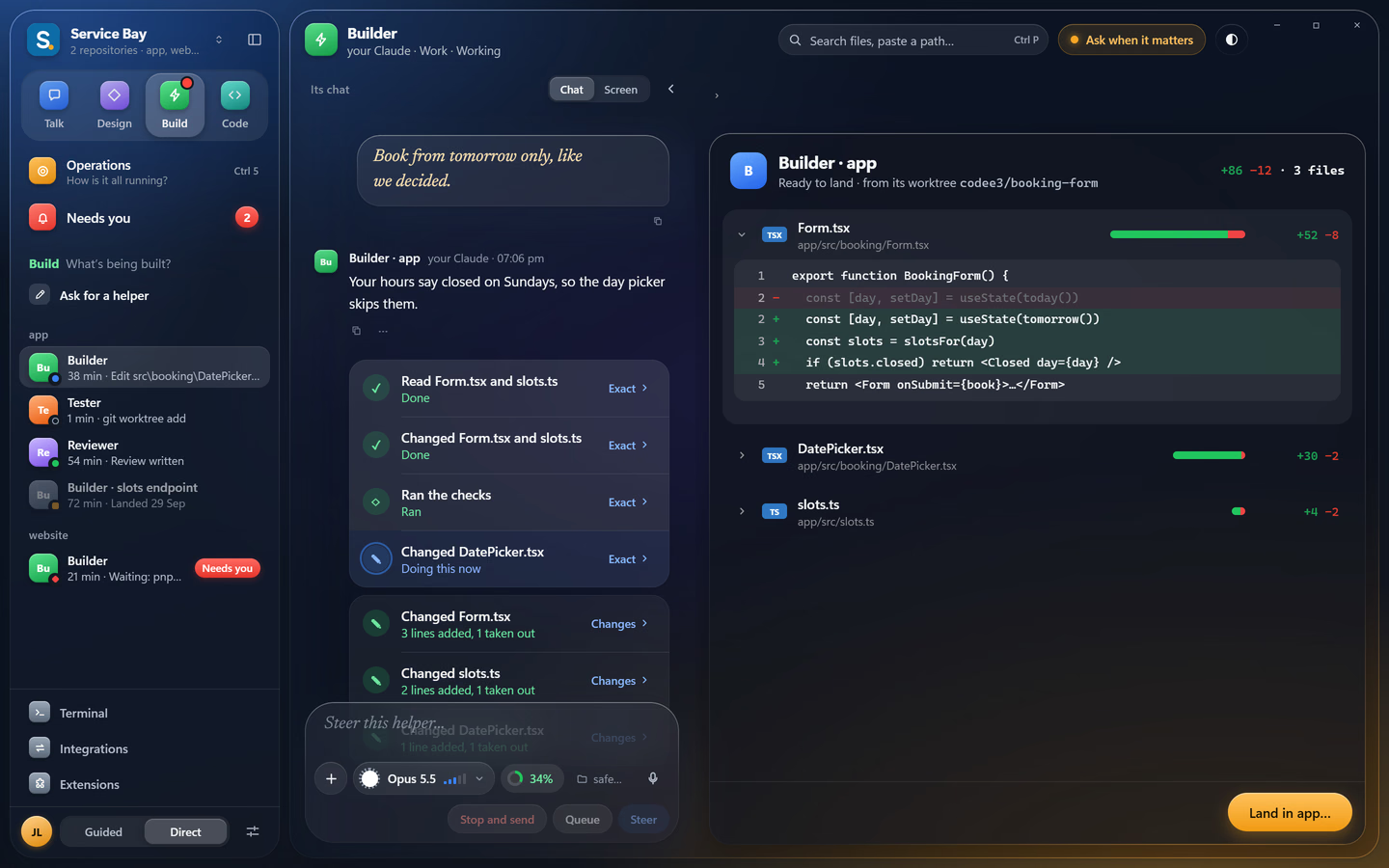
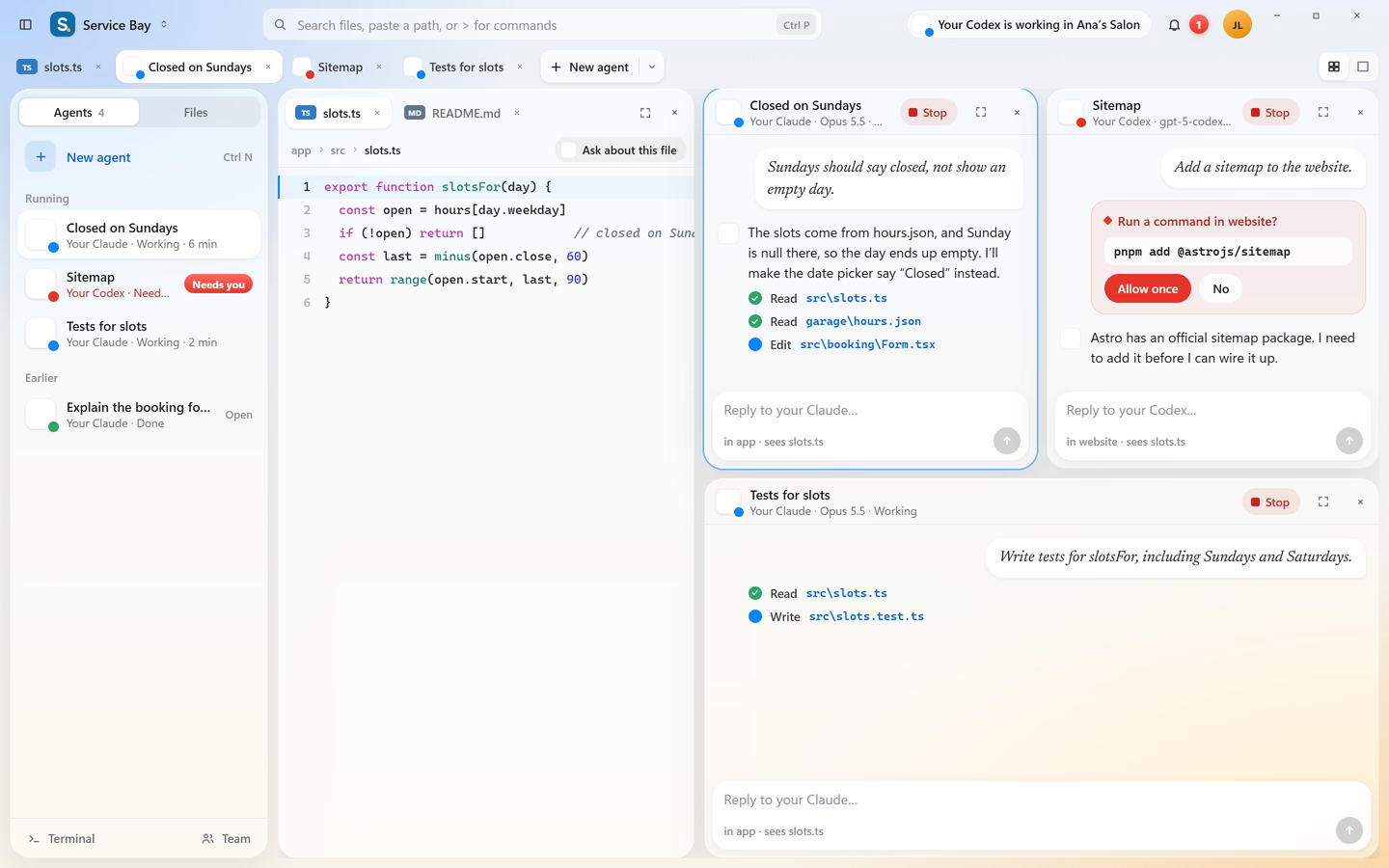
AI agents are IDE-native.But your IDE is agent-hostile.
The fix isn’t a migration. It’s one line.
Every tool has its own entry to the same brain — Claude Code, Codex, Cursor, and any file-based agent. See every tool it routes, and the checks.
The tax
The bigger the repo, the more it costs to ask it anything.
Not because the agent got slower — because every question re-reads a codebase that keeps growing, and re-settles the contradictions your team already settled. Here is that bill, itemized: the tokens it burns, and the hours you burn checking it.
A model, not a measurement. The prices are real and current; the per-task estimates are the levers, shown as assumptions. The flat lane is how a binding record is designed to behave — not a customer result, and nothing here has measured your repo.
The climb is the shape most repos follow, not a promise about yours. · Opus 4.8 API list · $5 / M in · $25 / M out · July 2026
The bottom line is one decision, made once.
Write down which record governs, and every session after starts from it — not from a repository relearning what it already knew.
What it costs
One payment. Plain files. Yours to keep.
The gap in the Tax was monthly. This is once.
The founding price holds while founding — it returns to US$199 when the full release is authorised.
- As many repositories as you own or control
- No account, no licence server, nothing running on our side
- Plain files, yours to keep, offline from the first run
- Read the methodVendor-neutral, adoptable by hand, useful whether or not you ever buy anything.
- Inspect the checksWhat each one looks at, the real failure output, and what they do not prove.
- See the termsWhat the licence covers, and what is not built yet.
Your codebase remembers what was built. Codee3 remembers why.